
DA Releases Gun Violence Prevention Plan
November 16, 2021
Foreword
We are gun violence prevention experts, advocates for public safety, survivors of gun violence, and community leaders who believe that prosecutors have an obligation to think about violent crime not only after it has happened, but to take action to prevent it from happening in the first place.
The COVID-19 pandemic brought with it a loss of life from not only the virus, but from gun violence. One thing we know to be true is that the traditional criminal justice system cannot address gun violence alone. Instead, it is imperative that prosecutors work with law enforcement, gun violence prevention experts, advocates, the community, and crime survivors in order to create a strategy that will prevent future crime. People want to know that if someone commits an act of violence, that they will be accountable, but more importantly, they want to know that the office is trying to prevent that harm from happening in the first place.
As the most powerful law enforcement official in any county or city, elected District Attorneys must use this moment to be innovative, to use evidence-based approaches, and to learn from the communities most affected by violence to understand how to stop it. Only then will we be able to find real solutions that work.
The Travis County District Attorney’s Office gun violence prevention strategy is a combination of lessons learned from cities and counties across the country, and one that this community desperately needs. The four components to the strategy are crime prevention through partnering with violence intervention specialists, crime prevention through limiting access to firearms by people who should not have access, crime prevention through innovative prosecution strategies, and crime prevention by treating the trauma caused by violence.
This holistic approach is innovative, and one that other prosecutor offices should consider adopting.
Alliance for Safety and Justice
Austin EMS Association
Austin Justice Coalition
Austin/Travis County Family Violence Task Force
Brady Campaign to Prevent Gun Violence
Cities United
Austin Office of Violence Prevention
Community Justice Action Fund
Crime Survivors for Safety and Justice
Everytown for Gun Safety
Giffords
The Health Alliance for Violence Intervention
Life Anew
Lock Arms for Life
March for Our Lives-Austin Chapter
Moms Demand Action
National Institute for Criminal Justice Reform
National Domestic Violence Hotline
Team Enough
Texas Gun Sense
The SAFE Alliance
Sandy Hook Promise
Ujima Inc., The National Center on Violence Against Women in the Black Community
KEEPING OUR COMMUNITY SAFE:
HOW THE DISTRICT ATTORNEY IS ADDRESSING THE RISE IN GUN VIOLENCE IN TRAVIS COUNTY
Every life lost is a tragedy for our community, and the Travis County District Attorney’s Office is committed to implementing policies to address the root causes of preventable deaths in order to make the community safer for everyone. Sadly, the pandemic has brought with it not only over 1,400 lives lost in Travis County due to COVID-19, but a rise in preventable deaths from overdoses, traffic crashes, and homicides. 1
One of the biggest rises we have seen is homicides. As of the writing of this paper, on November 9, 2021, there have been 82 homicides in Travis County compared with 43 in all of 2017.2
Traditional prosecution of gun violence remains a key part of our strategy, but alone it is not enough.
To address the rise in gun violence in Travis County, TCDAO has developed a four-part strategy:
– Use both traditional and innovative prosecution strategies for sentencing people charged with gun crimes.
– Work with community members to prevent gun violence by creating, supporting, and implementing intervention and prevention programs.
– Take guns out of the hands of those at high risk for committing an act of gun violence in an intimate partner relationship.
– Support programming to help survivors and families of the victims of gun violence.
Deaths from COVID-19 are tracked here: https://www.nytimes.com/interactive/2021/us/covid-cases-deaths-tracker.html.
Data on other causes of death compiled from: https://www.traviscountytx.gov/medical-examiner/annual-reports
Year Overdose Homicide Traffic
Deaths Deaths Deaths
2017 239 43 118
2018 226 49 130
2019 193 49 140
2020 262 67 163
2 https://www.austintexas.gov/GIS/CrimeViewer/
BACKGROUND
The COVID-19 pandemic brought with it an unparalleled loss of life. It also devastated our economy, resulting in an economic downturn and the attendant rise in crime that happens when people lose their jobs, their homes, and access to mental health and substance use disorder treatment. Numerous researchers have found that the destabilizing impact of the pandemic has caused the rise in violence.3
According to the Gun Violence Archive, over 32,000 people in America have already died by firearms in 2021, with communities of color disproportionately impacted. According to the Center for Disease Control (CDC), Black Americans are over ten times more likely to die by firearm homicide and Hispanic Americans are two times more likely to die by firearm homicide than their White counterparts. 4 Black men also make up over 50% of all gun homicide victims in the US every year despite comprising less than 7% of the population.5 Everystat, a database of local gun data from Everytown for Gun Safety, states that in Texas in an average year, 3,455 people die by guns.6 With a rate of 12.2 deaths per 100,000 people, Texas has the 29th-highest rate of gun deaths in the US. Travis County is not immune; while violent crimes are down overall, homicide rates have risen to levels not seen since the 1990s.7
TCDAO APPROACH TO GUN VIOLENCE
The strategy of TCDAO to stop the rise in homicides is straightforward: work with the community to reduce gun violence before it happens, prevent it from happening again after an arrest, and hold people accountable when they commit acts of violence in our community. Fortunately, there are evidence-based practices that research has shown prevent gun violence.8
Prosecution Strategies
For the vast majority of people charged with a gun offense, TCDAO prosecutes the case in a traditional manner. See Appendix A (breakdown of Gun Arrests 1/1/2021-11/8/2021). TCDAO has reprioritized our resources in 2021 to focus our most experienced prosecutors on serious, violent crime. We are focusing our limited resources on serious crime and violence which also means we will increase diversion opportunities for lower-level offenses, like simple drug possession. In addition, in April 2021 our office announced the creation of a Homicide and Major Crimes Unit that is staffed by experienced prosecutors who are experts in the law, well-versed in forensics, have previously handled complicated cases, and who involve themselves in the investigation of the case from the moment they are reported, and not just after the police have completed their investigation. We are committed to continuing to work collaboratively with local law enforcement entities to ensure the successful investigation and prosecution of serious offenses.
3 https://www.bu.edu/articles/2021/why-has-gun-violence-increased-in-the-united-states/
4 https://efsgv.org/learn/type-of-gun-violence/firearm-homicide/
5 Centers for Disease Control and Prevention, Web-based Injury Statistics Query and Reporting System (WISQARS), “Fatal Injury Reports,” last accessed Mar. 20, 2020, https://www.cdc.gov/injury/wisqars. Figures represent an average of the five years of most recently available data: 2014 to 2018.
6 https://everystat.org/#Texas
7 Two recent pieces have explored this issue at length: https://www.austinchronicle.com/news/2021-10-15/hiring-more-police-is-not-a-great-way-to-prevent-murders/ and https://www.police1.com/patrol-issues/articles/how-would-more-cops-impact-austins-rising-gun-violence-what-the-chief-and-experts-say-squoNmbkC6B79wcJ/.
8 In fact, recent polling suggests that a majority of Americans support community violence interrupter programs to promote public safety.
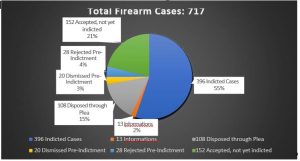
However, TCDAO also recognizes the stark reality; the majority of gun offenders sentenced to prison will be released, and the likelihood of recidivism remains high without finding a way to change behaviors. In order to prevent recidivism from occurring, we are working to develop a pilot pre-trial gun program that will offer evidence-based interventions intended to reduce recidivism. Recent studies have demonstrated that other cities have seen a reduction in violent recidivism through such programs that is as high as forty-percent compared with traditional gun prosecutions. 10
But if we are serious about reversing this trend, we must also work to prevent violence in our communities before it takes place.
Prevent Gun Violence Before It Happens.
“Gun violence has permeated our national conscience. It is a disease that is spreading and needs to be stopped. I believe it’s imperative that we attempt to understand people on both sides of the pistol. They both need our help, because hurt people hurt people” – Erica Ford, violence interrupter and founder of Life Camp, Inc.
TCDAO is committed to supporting the city of Austin, and the people of Travis County, in a community-wide initiative to reduce crime. The City of Austin recently funded an Office of Violence Prevention (OVP) to help coordinate efforts with Austin Public Health, city leaders, and the community at large.11 To strengthen our collaboration, TCDAO will appoint a liaison to the Office of Violence Prevention. The liaison will work with OVP to help coordinate violence intervention
9 The data reflects adult criminal prosecutions for firearms the TCDAO has received since January 1, 2021. In order to pull this data, the charging language includes one or more of these terms: firearm, gun, handgun, rifle, and/or shotgun.
10 The Joyce Foundation is currently studying three pretrial gun diversion programs:
https://voices.uchicago.edu/smartdecar/plgdps/; early results indicate a high level of success. See also, Loyola study on firearm possession, https://www.luc.edu/media/lucedu/ccj/pdfs/firearmpossessionsentencinginillinois.pdf
11 https://www.austintexas.gov/news/austin-public-health-announces-office-violence-prevention-program-manager programs within the city limits of Austin. The goal of the liaison’s role will be to support the existing infrastructure of the OVP while also providing additional expertise, resources, and best practices to coordinate across jurisdictions. We will work with the OVP and community partners to better understand and capture local data. We will also continue to work with our partners at the National Institute for Criminal Justice Reform (NICJR). NICJR has conducted a series of studies on the true cost of gun violence in cities around the country and TCDAO will help provide data to support their efforts.
We are also committed to ensuring that OVP is able to successfully implement a community-violence intervention program. Community violence intervention programs are led by people in communities who have experienced or are experiencing violence and who work closely with at-risk clients by assisting with their needs such as educational training, drug treatment, addressing trauma, and cognitive behavioral therapy. Across the country, these programs work with violence intervention specialists who intervene in high-risk circumstances to try to stop retaliation. “Utilizing proven methods, workers identify ongoing conflicts by talking to key people in the community about ongoing disputes, recent arrests, recent prison releases, and other situations and use mediation techniques to resolve them peacefully. When a shooting happens, trained workers immediately work in the community and at the hospital to cool down emotions and prevent retaliations – working with the victims, friends and family of the victim, and anyone else who is connected with the event.” Dr. Chico Tillmon, University of Chicago Crime Lab.
Many studies show that gun violence is concentrated on a very small number of people who have similar risk factors. This retaliatory violence is predictable and therefore often preventable. Community violence prevention programs target those areas and populations with credible messengers who have experienced gun violence and can intervene before any retaliation happens. These programs have been enormously successful. “This work is fundamentally relationship-based: It leverages the credibility of workers to ensure that resources flow directly to those most impacted, in the areas most needed. Studies show that these approaches are effective at interrupting cycles of violence, decreasing injury recidivism and incarceration, and increasing employment.” Fatimah Loren Dreier, Executive Director for the Health Alliance for Violence Intervention.
This approach is most effective when a violence prevention system is deployed to ensure individuals at risk of crime or violence are engaged regardless of where they are in their life: healthy in the community, recovering in the health system, or under the watch of the justice system. For those in the community, violence interruption programs and targeted trauma-informed care programs like READI in Chicago and ROCA in Baltimore 12 are models. Hospital-based violence intervention programs are effective at serving those with a history of injury and at risk of reinjury or retaliation. The Gun Violence Reduction Strategy 13 engages justice-involved individuals at risk for group violence.
When funded appropriately, Cure Violence, a model violence interruption program, reduced homicides by 30% in North Philadelphia.14 Studies have shown similar reductions in homicides and gun violence
12 https://rocainc.org/how-we-do-it/outcomes/
13 https://nicjr.org/wp-content/uploads/2021/06/Effective-Community-Based-Violence-Reduction-Strategies.pdf
14 https://cvg.org/impact/#evaluations
in other cities, including Chicago, New York, and Los Angeles.15 For example, with the implementation of the Crisis Management System (CMS) in New York led by Erica Ford and the Life Camp Inc program, a team that mediates conflicts and connects high-risk individuals with services, there was a 40% reduction in shootings across all program areas.16 Advance Peace, a violence interruption program based out of Richmond, California, has been enormously successful in reducing gun violence. Indeed, in the summer of 2021, there were no homicides over the summer months, compared to 14 the previous summer.17 Hospital-based violence intervention programs have been shown to decrease risk of repeat injuries or future incarceration, saving both lives and money.18
To help accelerate coordination, TCDAO has supported efforts to utilize American Rescue Plan funds to bring already allocated federal funding from the Biden-Harris Administration to local community violence prevention programs. TCDAO will assist in the implementation and coordination of community investment strategies by identifying people at risk for committing an act of gun violence, sharing data and information about arrests and convictions related to gun violence, and serving as a community partner.
Prevent Access to Firearms for Those at High-Risk of Committing Intimate Partner Violence
The District Attorney’s Office will help build a comprehensive strategy to prevent gun violence within intimate partner relationships. When domestic violence escalates, the risk of death to a female victim when the male abuser has access to a firearm increases by 1,000 percent.19 According to the Violence Policy Center, over 90 percent of women killed by men were murdered by someone they knew, and the most common weapon used was a gun.20 To stop this, Austin is a part of a new federal strategy to collaborate with local stakeholders; one of the initial tasks this cross county-city group will be working on is finalizing the family violence county-wide firearm surrender program.21
This spring, the District Attorney’s Office enacted its own firearm surrender policy. Assistant District Attorneys are instructed to ask judges, before a person is released from jail, whether that person is in possession of or has access to any firearms.22 If the answer is yes, instead of surrendering the firearms to a family member who may live in the same household (the previous practice), our ADAs now ask the judge to order the person to surrender the firearms to the Travis County Constable of Precinct 5 and to provide proof of such surrender to the Court. Any violation of this order means that the ADA will be asking for the person to face a revocation or modification of their bond.
15 Id.
16 NYC Office to Prevent Gun Violence: Crisis Management System
17 https://richmondconfidential.org/2012/09/25/ons-reports-significant-drop-in-richmond-homicides-to-human-rights-commission/
18 https://pubmed.ncbi.nlm.nih.gov/16966983/
19 https://www.pbs.org/newshour/health/domestic-violence-shelters-are-swamped-experts-worry-surging-gun-sales-could-make-things-worse
20 https://vpc.org/press/nearly-1800-women-murdered-by-men-in-one-year-new-violence-policy-center-study-finds/ 21https://www.kvue.com/article/news/crime/austin-crime-violence-american-rescue-plan/269-607404fe-02d1-47ca-ab16-3fb5eba27f65. While TCDA has a firearm surrender protocol that applies post-arrest, county-wide support is needed for a firearm surrender program to be effective when it is a high-risk situation that is pre-arrest or if urgent action is needed post-arrest.
22 The policy can be found here: Travis County DA: Firearm Surrender Policy
The steps our office has taken, however, are not enough. Travis County needs a county-wide firearm surrender protocol that will ensure that those at high-risk of committing gun violence23 against a partner surrender their weapons, and that prosecutors, law enforcement, and advocates at each level of the system are cooperating to keep guns out of these high-risk situations. TCDAO is committed to the creation of a county-wide firearm surrender program and will be engaging stakeholders to provide support based on established best practices. In addition, TCDAO is partnering with local and state law enforcement and community-based organizations to promote safe firearm storage. In high-risk situations, safe firearm storage can save lives. Finally, TCDAO recently entered a partnership with Arizona State and Johns Hopkins to update groundbreaking research that identified access to a firearm as a key factor in detecting future homicides in intimate partner violence incidents. This updated data will allow TCDAO to continue to identify and intervene in intimate partner cases with a high risk of future violence, including homicide.
Provide Services for Victims of Gun Violence
“We articulated a vision, we wanted a trauma recovery center in every city, to create a web to keep people from falling through the cracks.”- Robert Rooks, Co-Founder of the Alliance for Safety and Justice”
Finally, TCDAO is committed to supporting programming to help victims of gun violence and their families with recovery—both physically and mentally. Since the start of 2021, the TCDAO’s office has prioritized ensuring that victims of crime are treated with dignity and respect. TCDAO recently announced the creation of a stand-alone unit of trauma-informed counselors to work with victims of crime throughout the criminal justice process and has conducted extensive trauma training for TCDAO staff.
But if we are serious about preventing violence in our community, we must do more to address the harm and trauma it causes in impacted communities. For example, a Trauma Recovery Center (TRC) serves victims of gun violence who are most at risk committing crimes themselves if their trauma is left unaddressed.24 Resources like a trauma recovery center can provide wrap-around treatment for those who have experienced trauma through gun violence. Crime Survivors for Safety and Justice, along with the Alliance for Safety and Justice, have worked with communities to bring Trauma Recovery Centers to over 39 cities across the country. They have been working hard to bring one to Travis County, and TCDAO supports and encourages the effort to bring much-needed resources to victims of violent crime and their families.
To help facilitate this process, TCDAO is committed to working with County and City Stakeholders and to pledging financial assistance towards getting a center up and running.
23 Travis County already has a high-risk family violence task force that identifies defendants who may be at high risk for committing acts of greater violence using evidence-based data and survey. This same tool can be used to identify people in the community or defendants who should either be asked or ordered by a court to surrender their firearm.
24 Statesman: Trauma Recovery Key to Austin Public Safety